Did a Japanese Millionaire Really Turn Into a Dog? The Truth Behind the Viral Story and Why People Believe It
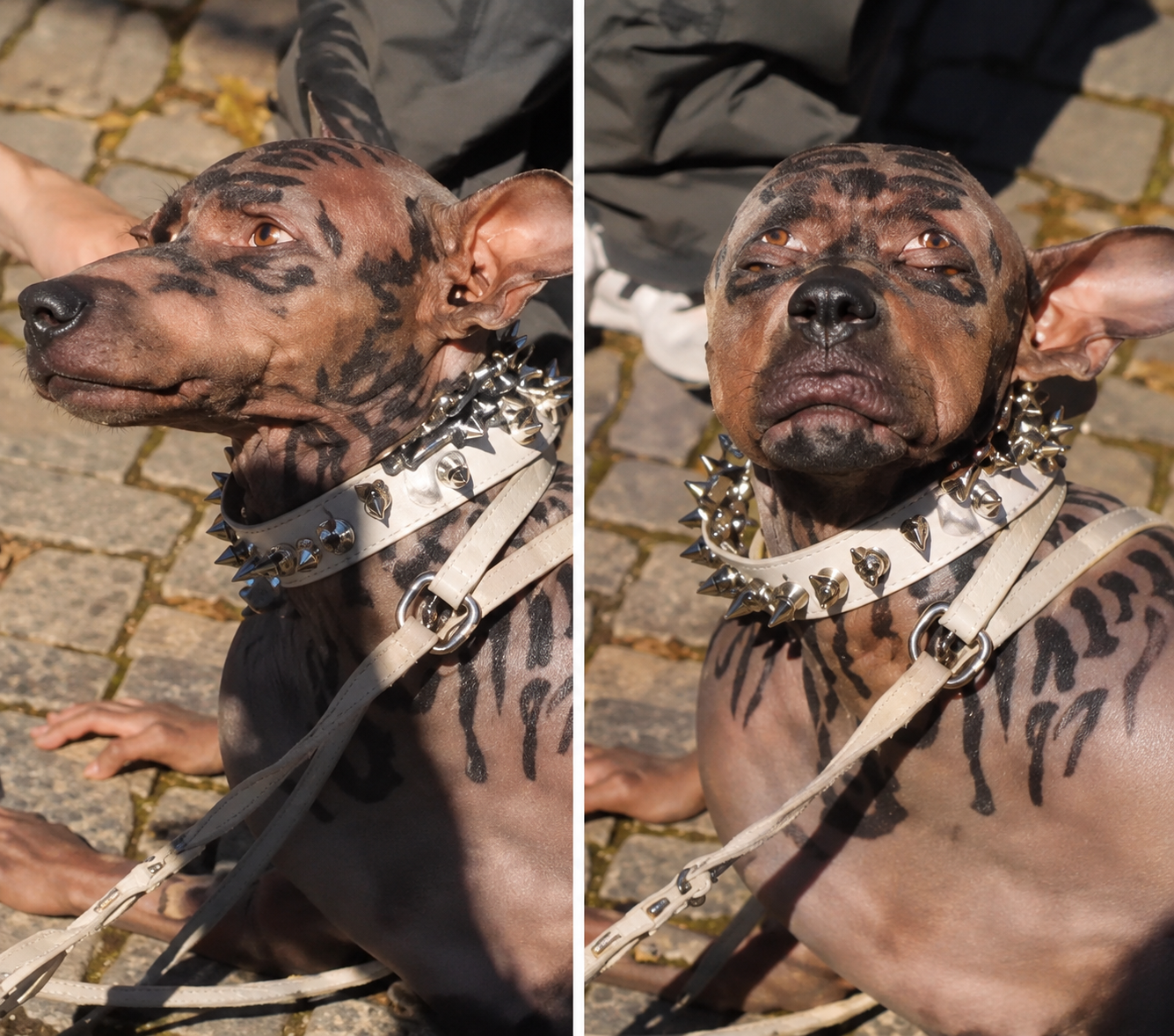
Did a Japanese Millionaire Really Turn Into a Dog? The Truth Behind the Viral Story and Why People Believe It
A bizarre story has been circulating online claiming that a Japanese millionaire somehow “turned into a dog.” The story sounds so extraordinary that it immediately raises an obvious question: Could this possibly be real?
My first reaction was that it sounded like a rumor created simply because unusual stories attract attention on social media. In much the same way that sensational news coverage can exaggerate a tense situation to attract viewers, social media creators can turn an unusual event into a dramatic story designed to generate clicks, views, comments, and shares.
But there is an important distinction between the viral claim and the real story behind it.
The Viral Claim: Did a Man Really Become a Dog?
No. There is no credible evidence that a Japanese millionaire literally transformed into a dog.
The viral story appears to be a sensationalized version of a real and much more practical situation involving a Japanese man known online as Toco.
Toco became known for wearing an extraordinarily realistic Border Collie costume. Reports have said that he spent roughly 2 million yen (around $14,000) on the highly detailed costume.
That is certainly unusual. But it is not a supernatural transformation.
He did not biologically become a dog. He wore an elaborate costume designed to make him look remarkably similar to one.
And that difference is extremely important in the age of AI-generated content.
The Real Story Is Strange Enough
The truth does not actually need the fake “millionaire turned into a dog” claim to be interesting.
Toco's story is unusual precisely because it is practical and real.
A person spent a significant amount of money on an extremely realistic animal costume. The craftsmanship was good enough to create an illusion that could look surprisingly convincing in photographs and videos.
That alone is fascinating.
Modern technology, costume design, materials, photography, video editing, and AI can all contribute to creating images that look far more realistic than many people expect.
The problem begins when viewers stop asking what they are actually seeing.
A person wearing a dog costume can become, in a viral headline, “a man who became a dog.”
And once that version starts circulating, people may remember the sensational claim rather than the original facts.
Why Did I Suspect the Story Was Fake?
When I first came across the claim, one of the biggest warning signs was the lack of a credible original source.
In today's social-media environment, almost anything can become viral before anyone checks whether it is true.
That is especially concerning now that we are living through the AI era.
AI can generate images, videos, voices and other content that look surprisingly realistic. Someone can take a real person, a real event, or an ordinary photograph and create a completely different narrative around it.
That means the fact that something looks real is no longer enough.
We have entered an era where seeing is not necessarily believing.
AI Has Changed the Meaning of “Seeing Is Believing”
In the past, people often treated photographs and videos as strong evidence.
Today, that assumption is becoming increasingly dangerous.
AI tools can create realistic-looking scenes that never happened. They can alter photographs, generate people who do not exist, change backgrounds, manipulate expressions, and produce videos that appear authentic at first glance.
This does not mean every unusual video is AI-generated.
It means we should become more careful about what we accept as fact.
The “Jaso” or “Japanese millionaire turned into a dog” story is a perfect example of how a real and unusual subject can potentially be transformed into a completely different viral narrative.
The original idea—someone wearing a highly realistic dog costume—is strange but possible.
The claim that a human literally transformed into a dog is an entirely different proposition.
Why Do People Believe Stories Like This?
The human brain is naturally attracted to unusual information.
A normal story does not always stop someone from scrolling.
But a headline such as:
“Japanese Millionaire Turns Into a Dog”
immediately creates curiosity.
People want to know:
How did this happen?
Why did he do it?
Is it actually possible?
What does he look like?
That curiosity creates engagement.
And social media platforms reward engagement.
The more surprising the story, the more likely people may be to stop, watch, comment, or share it.
This creates a powerful cycle:
Unusual claim → curiosity → clicks → engagement → more exposure → more people see it → more people believe it.
The story can therefore become viral not because it is true, but because it is interesting.
The Millionaire Angle Makes the Story Even More Attractive
Another reason the story is likely to attract attention is the association with wealth.
People are naturally curious about how wealthy individuals spend their money.
A millionaire buying a luxury car is not particularly surprising.
A millionaire spending thousands of dollars on a hyper-realistic dog costume is much more unusual.
That unusual combination—money + celebrity-like curiosity + bizarre behavior + a realistic visual—makes an ideal recipe for viral content.
But this can also create stereotypes.
If people repeatedly encounter sensational stories portraying wealthy or upper-class individuals as strange, reckless, or disconnected from ordinary life, they may gradually develop unfair assumptions about wealthy people in general.
That is another reason context matters.
One unusual person does not represent an entire social class.
AI Can Turn a Real Story Into an Illusion
This is where I believe the story becomes particularly relevant.
The problem is not simply fake news.
It is the blurring of reality and fiction.
Imagine starting with a real story:
«A Japanese man spent around $14,000 on an extremely realistic Border Collie costume.»
That is unusual, but understandable.
Now imagine the story being shortened for social media:
«“Japanese man becomes a dog.”»
Then someone adds dramatic AI-generated visuals.
Another creator reposts it.
Someone else adds:
«“Japanese millionaire turns into a dog!”»
After enough repetition, people may encounter the final version without ever seeing the original story.
At that point, the original context can disappear completely.
How Can You Tell Whether a Viral Story Is Real?
When I see an extraordinary claim online, I think there are several basic questions everyone should ask.
1. Where Is the Original Source?
Don't rely only on a screenshot, TikTok, Facebook post, YouTube Short, or repost.
Try to find where the claim originally came from.
If a dramatic story is supposedly major news but you cannot find a credible original source, that should immediately make you cautious.
2. Is the Source Credible?
A viral account is not automatically a reliable news organization.
Look at who published the information.
Does the source have a history of accurate reporting?
Are reputable news organizations reporting the same thing?
Does the article provide evidence?
These simple checks can prevent many false stories from spreading.
3. Is the Claim Plausible?
This does not mean that everything unusual should automatically be rejected.
But extraordinary claims deserve extraordinary evidence.
If someone claims that a human being physically transformed into another species, the evidence required should be far stronger than a short social-media video.
Ask yourself:
Is there a realistic explanation for what I am seeing?
In Toco's case, there is.
A highly realistic costume provides a practical explanation.
4. Remember the AI Era
This may be the most important lesson.
We are living in an era where digital content can be manufactured extremely quickly.
A realistic image does not automatically prove an event happened.
A convincing video does not automatically prove the story attached to it is true.
And a viral post does not automatically become journalism simply because millions of people have viewed it.
The Real Lesson Behind the “Dog” Story
For me, the most interesting part of this story isn't whether someone can look like a dog.
It is how easily a real, unusual story can become a fictional viral narrative.
Toco's actual story is already unusual enough: a Japanese man spent a large amount of money on an incredibly realistic Border Collie costume.
There is no need to turn that into a supernatural transformation.
The viral version is more dramatic, but the real version is more believable.
And that is exactly why we should be careful.
Sometimes the truth is strange enough.
Final Verdict: Real Person, Real Costume, Fake Transformation
So, did a Japanese millionaire really turn into a dog?
No credible evidence supports that claim.
The documented story associated with the viral phenomenon involves Toco, a Japanese man who spent roughly 2 million yen on a highly realistic Border Collie costume.
He did not literally transform into a dog.
The viral claim appears to be a sensationalized interpretation of an unusual but real situation, potentially amplified by AI-generated or manipulated content and social-media storytelling.
The bigger lesson goes far beyond Toco.
In the AI era, we need to develop a new habit:
Don't believe something simply because it looks real.
Find the original source.
Check its credibility.
Consider whether the claim is actually plausible.
And remember that technology can create incredibly convincing illusions.
The next viral story might be even more unbelievable—and even more convincing.
That is exactly why we should pause before we click, believe, or share.
- What Are the Emotional Challenges of Being Obese and Unmarried in Your 30s?Excerpt: What does it really feel like to be obese and unmarried in your 30s? In this honest, first-person article, a doctor shares the emotional challenges of low self-esteem, feeling left behind, and fear of judgment, while offering practical advice, hope, and motivation to improve both physical and mental well-being.
- How Did the Cockroach Janta Party Start?The Cockroach Janta Party emerged in 2026 as a satirical online movement after controversy surrounding remarks perceived as insulting to unemployed youth. Using the cockroach as a symbol of resilience, it rapidly evolved from viral memes into a broader youth-led campaign focused on unemployment, exam paper leaks, and demands for greater government accountability.
- How Can Someone Tell If Social Media Is Harming Their Mental Health?Discover the hidden signs social media may be harming your mental health. Learn practical tips, a relatable student story, and healthy habits to regain balance.
- Are All Nicotine Products Equally Harmful? A Cardiologist Explains the Science Behind the RisksAre all nicotine products equally harmful? Learn what science says about nicotine, cigarette smoke, combustion, and the real causes of smoking-related diseases in this evidence-based guide.
- Does Everyone Feel Jealous at Work? What's Normal?Feeling jealous at work is a normal human experience. Many people occasionally compare themselves to coworkers who receive promotions, recognition, or new opportunities. While these feelings can be uncomfortable, they don't necessarily indicate a problem. When acknowledged and managed constructively, jealousy can even highlight personal goals and motivate professional growth. However, if it becomes persistent, damages relationships, or interferes with work performance, it's important to address the underlying causes and seek support if needed.
Comments (0)
Please to leave a comment.