How Can Someone Tell If Social Media Is Harming Their Mental Health?
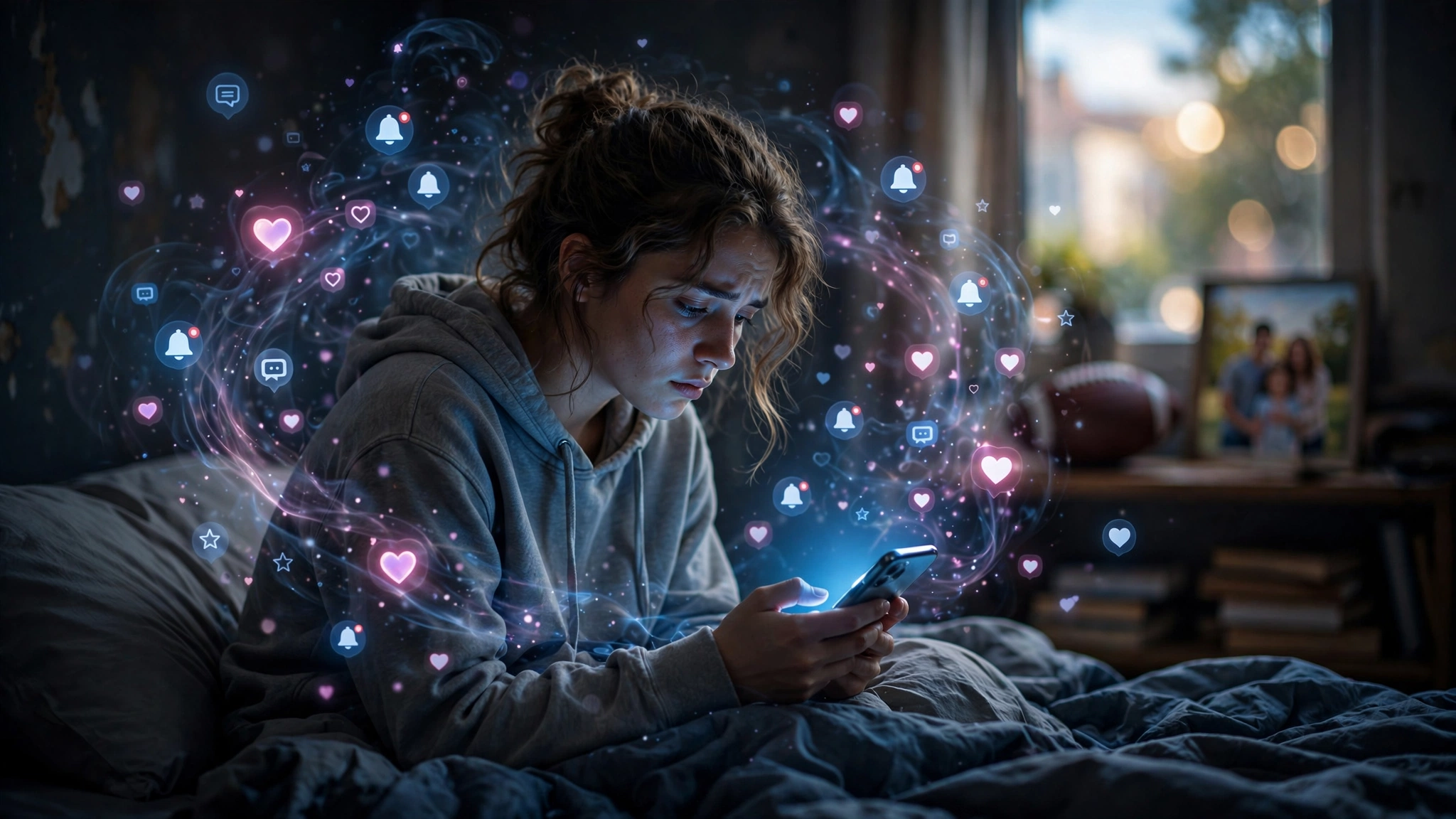
How Can Someone Tell If Social Media Is Harming Their Mental Health?
Primary Keyword: How Can Someone Tell If Social Media Is Harming Their Mental Health
Introduction
Have you ever closed Instagram, TikTok, or Facebook feeling strangely empty—even though you just spent an hour being "entertained"?
You're not alone.
Social media has transformed how we communicate, learn, and relax. It keeps us connected with friends across the world, helps us discover new ideas, and even supports education and careers. But there is another side that often goes unnoticed.
Social media rarely damages mental health all at once. Instead, it slowly changes how you think, sleep, compare yourself with others, and experience everyday life.
For university students, this matters more than ever. Academic pressure, career uncertainty, and the desire to fit in can make social media both comforting and emotionally exhausting.
So how do you know when scrolling has crossed the line?
The answer isn't simply how many hours you spend online.
The real question is:
"Is social media helping me live my life—or replacing it?"
Why University Students Are Especially Vulnerable
University is a time of enormous change.
Students leave home, build new friendships, face academic challenges, and make decisions that shape their future.
At the same time, social media constantly presents images of people who appear happier, wealthier, fitter, more successful, and more attractive.
When you're already questioning yourself, these comparisons become even more powerful.
Instead of asking,
"Am I improving?"
many students begin asking,
"Why isn't my life as exciting as theirs?"
The Biggest Warning Sign
The biggest warning sign isn't spending five or even six hours online.
It's living further away from reality every day.
You slowly stop enjoying your own experiences because someone else's life always appears more exciting.
Your real achievements feel smaller.
Your ordinary moments feel boring.
Your happiness begins depending on what appears on your screen instead of what happens in your real life.
That is when social media starts controlling your mental well-being.
Case Study: Ahmed's Story
Ahmed was a second-year university student.
He downloaded several social media apps to stay connected with classmates.
Initially, everything seemed normal.
Soon he found himself checking notifications before brushing his teeth.
During lectures, he couldn't resist opening short videos every few minutes.
His football evenings disappeared.
Family dinners became silent because everyone—including Ahmed—was looking at a phone.
Every night he promised himself:
"Just ten more minutes."
Two hours passed before he realised it.
His sleep deteriorated.
His grades dropped.
His confidence disappeared.
The worst part wasn't wasting time.
It was believing everyone else had a better life.
One afternoon he opened his screen-time report.
53 hours in one week.
That number shocked him.
He deleted two apps, limited his screen time, started playing football again, and began meeting friends face to face.
Within weeks he noticed better sleep, improved concentration, and a calmer mind.
The internet hadn't changed.
His relationship with it had.
10 Signs Social Media Is Affecting Your Mental Health
1. You compare yourself with almost everyone.
2. Your real life feels boring compared with online content.
3. You ignore family or friends because you're scrolling.
4. You lose interest in hobbies you once loved.
5. You stay awake much later than planned.
6. You feel anxious when you cannot check your phone.
7. Your mood depends on likes, comments, or followers.
8. You open social media automatically without thinking.
9. You feel mentally tired after scrolling.
10. You know it's hurting you—but you keep doing it anyway.
If several of these describe you, it's worth taking a closer look at your digital habits.
The Hidden Trap: Comparing Reality With Highlights
People don't usually post arguments.
They don't upload exam failures.
They rarely show loneliness.
Instead, they post celebrations, achievements, vacations, and carefully chosen photos.
You're comparing your everyday reality with someone else's best moments.
That comparison is unfair from the beginning.
What Research Suggests
Studies have consistently found that heavy or passive social media use—especially endless scrolling and constant social comparison—is associated with higher levels of anxiety, depressive symptoms, poorer sleep, loneliness, and lower self-esteem in many adolescents and young adults. These studies show an association, which means social media may contribute to these problems or make them worse, but it is not the sole cause.
How to Take Back Control
Filter Your Content
If an account consistently leaves you feeling inadequate, jealous, or anxious, unfollow it.
Your feed should improve your life—not damage it.
Limit the Apps
You don't need every platform.
Keeping fewer apps reduces distractions without disconnecting you completely.
Limit Your Daily Screen Time
Even reducing social media by 30–60 minutes each day can create time for studying, sleeping, exercising, or meaningful conversations.
Go Outside
Walk.
Play football.
Visit a park.
Meet friends.
Real memories are far more valuable than endless scrolling.
Five Questions to Ask Yourself Tonight
Before sleeping, ask yourself:
Did social media improve my day or drain my energy?
Did I spend more time online than talking to people I care about?
Am I comparing my life with strangers?
When was the last time I spent an hour without checking my phone?
If social media disappeared tomorrow, would I feel relieved or anxious?
Your answers may reveal more than your screen-time report.
Final Thoughts
Social media is neither your enemy nor your saviour.
It is simply a tool.
Used wisely, it can educate, inspire, and connect.
Used without limits, it can slowly replace the life happening right in front of you.
The moment your virtual life becomes more meaningful than your real life, social media has stopped serving you—it has started controlling you.
Look up from the screen.
Call a friend.
Go for a walk.
Study with focus.
Create memories that no algorithm can ever replace.
Because at the end of your life, you won't remember the posts you scrolled past.
You'll remember the moments you actually lived.
- What Are the Emotional Challenges of Being Obese and Unmarried in Your 30s?Excerpt: What does it really feel like to be obese and unmarried in your 30s? In this honest, first-person article, a doctor shares the emotional challenges of low self-esteem, feeling left behind, and fear of judgment, while offering practical advice, hope, and motivation to improve both physical and mental well-being.
- How Did the Cockroach Janta Party Start?The Cockroach Janta Party emerged in 2026 as a satirical online movement after controversy surrounding remarks perceived as insulting to unemployed youth. Using the cockroach as a symbol of resilience, it rapidly evolved from viral memes into a broader youth-led campaign focused on unemployment, exam paper leaks, and demands for greater government accountability.
- Does Everyone Feel Jealous at Work? What's Normal?Feeling jealous at work is a normal human experience. Many people occasionally compare themselves to coworkers who receive promotions, recognition, or new opportunities. While these feelings can be uncomfortable, they don't necessarily indicate a problem. When acknowledged and managed constructively, jealousy can even highlight personal goals and motivate professional growth. However, if it becomes persistent, damages relationships, or interferes with work performance, it's important to address the underlying causes and seek support if needed.
- Can Avoiding These 3 Things During Middle Age Delay Dementia Risk by 13 Years?Discover how controlling high blood pressure, diabetes, and smoking during middle age may help reduce dementia risk and protect brain health for years to come. Can Avoiding These 3 Things During Middle Age Delay Dementia Risk by 13 Years?
- How to Work Alone Without Feeling IsolatedWorking alone offers freedom and flexibility, but it can also lead to loneliness if you're not intentional. Discover practical ways to stay connected, protect your mental well-being, and enjoy the benefits of working independently without feeling isolated.
Comments (0)
Please to leave a comment.