Diabetic-Friendly Fruit Snacks: What Actually Works?
"Fruit is full of sugar."
If you have diabetes—or care for someone who does—you've probably heard that sentence more times than you can count.
For years, fruit has been caught in the middle of confusing nutrition advice. Some people avoid it altogether because they're worried it will spike blood sugar. Others assume that because fruit is "natural," they can eat as much as they want.
The truth lies somewhere in between.
The good news is that most people with prediabetes, Type 1 diabetes, and Type 2 diabetes do not need to eliminate fruit. In fact, research consistently shows that eating whole fruit as part of a balanced diet can support overall health and may even reduce the risk of long-term diabetes complications when consumed in appropriate portions.
The key isn't avoiding fruit.
The key is choosing the right fruits, eating sensible portions, and understanding how different fruits affect your blood sugar.
As doctors, we often see people become unnecessarily afraid of fruit after receiving conflicting advice from friends, social media, or the internet. Some stop eating fruit completely. Others replace whole fruit with packaged "fruit snacks" or fruit juices, believing they're healthier. Unfortunately, those choices can sometimes make blood sugar management more difficult instead of easier.
This guide separates myths from facts using recommendations from organisations such as the American Diabetes Association (ADA), Diabetes UK, and findings from peer-reviewed scientific research.
By the end of this article, you'll know:
Whether people with diabetes should eat fruit.
Which fruits are the best choices.
Which fruits should be enjoyed in smaller portions.
Common mistakes that raise blood sugar.
Practical snack ideas that actually work in everyday life.
Let's begin with the biggest question of all.
Can People with Diabetes Eat Fruit?
Yes.
This answer surprises many people.
The American Diabetes Association encourages people with diabetes to include fruit as part of a healthy eating pattern. Whole fruits provide far more than natural sugars. They also contain:
Dietary fibre
Vitamin C
Potassium
Folate
Polyphenols
Powerful antioxidants
These nutrients help support heart health, digestion, immune function, and overall wellbeing—important because diabetes increases the risk of cardiovascular disease.
The important distinction is whole fruit versus processed fruit products.
A fresh apple behaves very differently in your body than a glass of apple juice.
A whole orange affects blood sugar differently than orange-flavoured soft drinks.
Even dried fruit can produce a different blood glucose response because its natural sugars become concentrated when water is removed.
This is why healthcare professionals focus on the form of the fruit, not simply whether it contains sugar.
Why Fruit Doesn't Affect Blood Sugar the Way Many People Think
Many people hear the word sugar and assume all sugars are equally harmful.
They aren't.
Whole fruit contains fructose, but it also comes packaged with fibre, water, vitamins, and plant compounds.
Think of fibre as nature's speed limiter.
Instead of sugar entering your bloodstream rapidly, fibre slows digestion, helping blood glucose rise more gradually.
That is one reason an apple usually produces a smaller blood sugar response than drinking apple juice, even though both come from the same fruit.
Researchers often describe this using the glycaemic index (GI) and glycaemic load (GL).
Glycaemic Index (GI) measures how quickly a food raises blood sugar.
Glycaemic Load (GL) considers both the GI and the amount of carbohydrate in a normal serving.
This means two fruits can have similar GI values but different effects depending on the portion you eat.
That's why portion size matters just as much as fruit choice.
The Biggest Mistake People Make
One of the most common misunderstandings isn't eating fruit.
It's how people eat it.
Many people:
Drink fruit juice instead of eating whole fruit.
Eat very large portions because fruit is "healthy."
Replace balanced snacks with only fruit.
Believe honey, dates, or smoothies are automatically better.
These habits often lead to larger blood sugar spikes than eating a sensible serving of whole fruit.
A much better approach is simple:
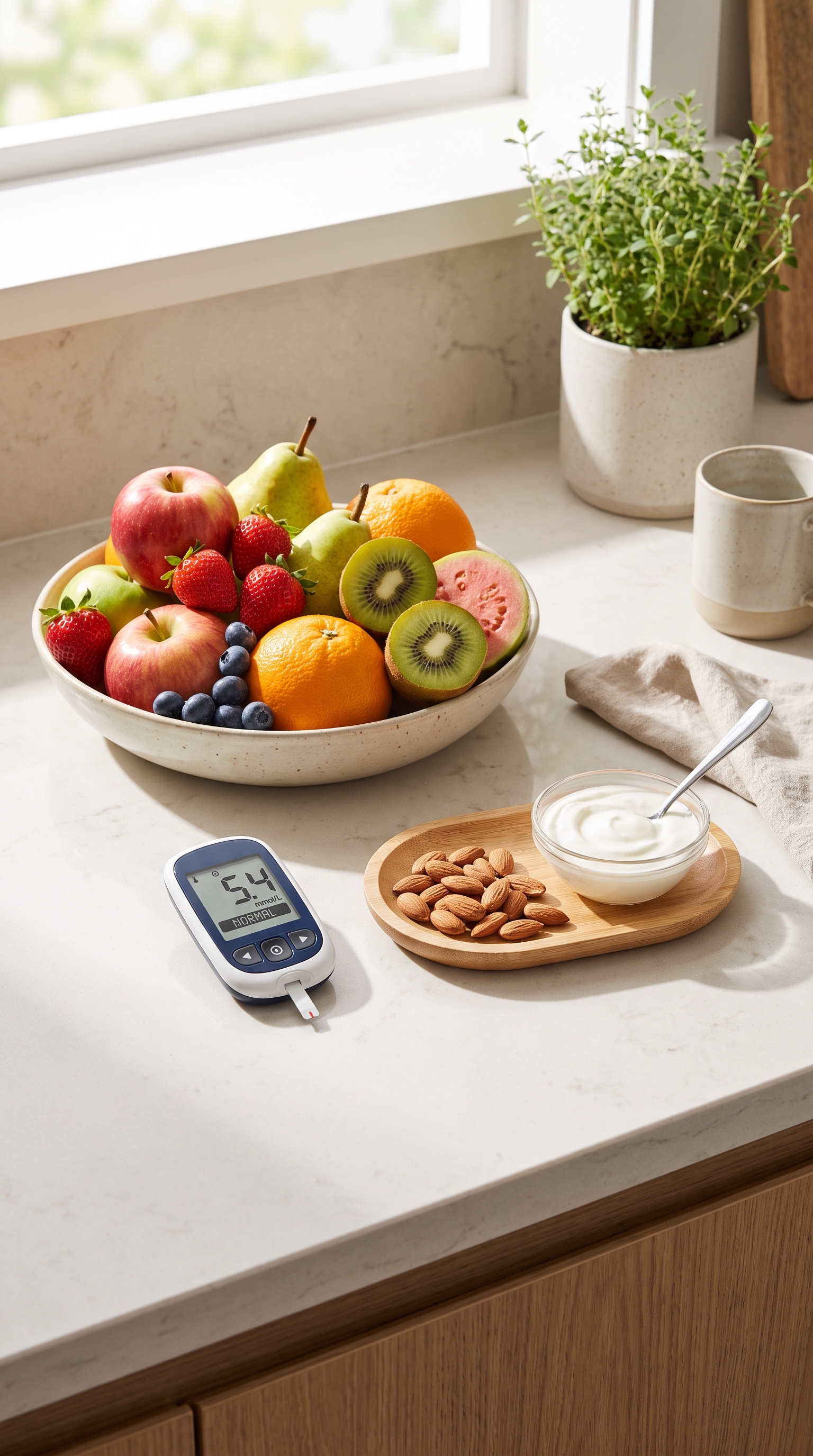
Choose whole fruit, keep portions moderate, and when appropriate, pair fruit with a source of prot
ein or healthy fat such as unsweetened Greek yoghurt, nuts, or seeds. This combination helps many people feel fuller for longer and can slow digestion.
- Can Food Really Be Medicine? Here’s What Science SaysCan food really act like medicine? Learn how healthy eating can help prevent and manage diabetes, high blood pressure, heart disease, and other chronic conditions.
- How Can I Lower My A1C and Better Manage Diabetes?Learn how to lower your A1C naturally and with proper diabetes treatment. A doctor explains evidence-based lifestyle changes, stress management, diet, exercise, and common mistakes that keep blood sugar high.
- Flesh-Eating Bacteria Explained: Symptoms, Causes, Treatment & How to Stay SafeLearn what flesh-eating bacteria really are, who is at risk, early warning signs, treatment options, and how to protect yourself and your family from these rare but life-threatening infections.
- Can Avoiding These 3 Things During Middle Age Delay Dementia Risk by 13 Years?Discover how controlling high blood pressure, diabetes, and smoking during middle age may help reduce dementia risk and protect brain health for years to come. Can Avoiding These 3 Things During Middle Age Delay Dementia Risk by 13 Years?
- Are Bamboo Toothbrushes Better Than Plastic? What the Evidence SaysAre bamboo toothbrushes really better than plastic? While bamboo toothbrushes offer significant environmental benefits due to their renewable, biodegradable handles, scientific evidence shows they clean teeth just as effectively as plastic toothbrushes when used correctly. This article examines the latest research on sustainability, oral health, hygiene, and life cycle assessments to help you make an informed, evidence-based choice.
Comments (0)
Please to leave a comment.